Weblink Resources
-

The materials on this page are specific to highly pathogenic avian influenza (HPAI). You can use these tools and resources to prepare for and respond to an outbreak of this disease. These tools include tehcnical guides for composting of of mass mortalities and sourcing of proper carbon materials.
Posted in: Weblink Resources -

In circular agriculture, all steps of the food system from growing, harvesting, packing, processing, transporting, marketing, consuming and disposing food are designed with a view to promoting sustainable development.
-
From leading voices in global development on achieving long-term sustainability and growth while ending hunger, poverty, and malnutrition
-
The circular economy is a system where materials never become waste and nature is regenerated. In a circular economy, products and materials are kept in circulation through processes like maintenance, reuse, refurbishment, remanufacture, recycling, and composting. The circular economy tackles climate change and other global challenges, like biodiversity loss, waste, and pollution, by decoupling economic…
-
The pace of innovation in the agriculture-related, health, and human sciences demands that knowledge rapidly reaches the people who depend on it for their livelihoods. The Cooperative Extension System (CES), in partnership with NIFA, is translating research into action: bringing cutting-edge discoveries from research laboratories to those who can put knowledge into practice.
Posted in: Weblink Resources -
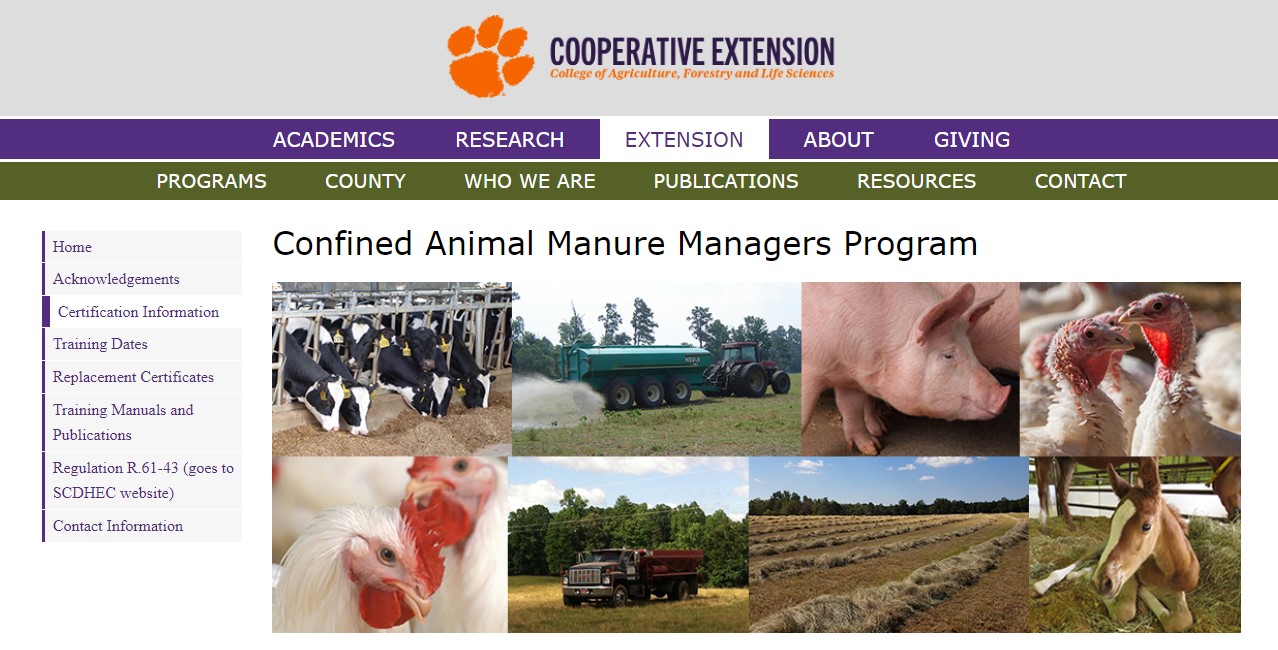
The Confined Animal Manure Managers (CAMM) program team consists of agents and specialists with Clemson University, the Clemson Extension Service, the SC Department of Health and Environmental Control, and the USDA Natural Resources Conservation Service. The team was assembled in 1998
-

National conservation practice standards should not be used to plan, design or install a conservation practice. You must use the conservation practice standard adopted and modified for use by the state in which you are working to ensure that you meet all state and local criteria, which may be more restrictive than national criteria.
-
AWM is a planning/design tool for waste storage structures utilized by both NRCS employees and external consultants, TSPs for animal feeding operations. It estimates the amount of manure, bedding, and process water based upon the type and number of animals and management followed. This information along with the local climatic factors and other characteristics feed…
Posted in: Weblink Resources -
Litterpedia brings together chicken bedding and litter management information for the Australian chicken meat industry in one, easily accessible location. Chicken litter, or bedding, is an essential part of breeding and growing meat chickens. Litter in good condition—dry and friable—optimises chicken health and welfare, improving their growth and productivity. Here you will find litter resources…
Posted in: Weblink Resources -
The LPELC is a network made up of professionals from across the U.S. and Canada with an interest and expertise in some aspect of animal agriculture and environmental stewardship. This learning network offers faculty and staff with opportunities to network, collaborate, mentor, and share. The network was officially established in 2005 with a USDA National…
Posted in: Weblink Resources